
THE LAST SUNSET IN AMERICA
LOGLINE
In an America where people can only tell the truth by singing it, two lovers road-trip west to reach the last real sunset before California snaps off and floats into the sea — a musical scored to R.E.M.
WRITER’S NOTE
In a country selling you its own ending, where no word can be trusted anymore, the only truth left is the kind you can't fake — the truth you can only sing.
This is my musical, and my strangest love letter to a country I can't quite stop loving. California is cleaving off the continent and floating into the Pacific, and America responds the only way it knows how: it turns the apocalypse into an event, sponsored, livestreamed, merchandised, a "Last Sunset Experience™" with grief packages starting at forty-nine dollars. Orson and Juno, the two tender, damaged souls from The Last Sandwich on Earth, climb into an old van and drive west against the whole exhausted machine, gathering a ragtag family along the way, trying to reach the coast in time to witness the last real sunset before it's gone.
I built it as a jukebox musical scored, in album order, by R.E.M.'s Automatic for the People. I need to tell you what that record is to me. My father died while I was still becoming the man he raised me to be, and that album , an album steeped in mortality that somehow never surrenders to despair, was the thing that walked beside me through the grief. It didn't fix anything. It just refused to let me be alone in it. Some music does that: it says the thing you can't say, and for a while that's enough to keep going. So I gave the whole film a rule drawn from that truth, that after meaning collapses, plain words stop holding, and people can only tell the truth by singing. Which the culture, of course, immediately monetizes. The film lives in the space between the honest song and the sold one.
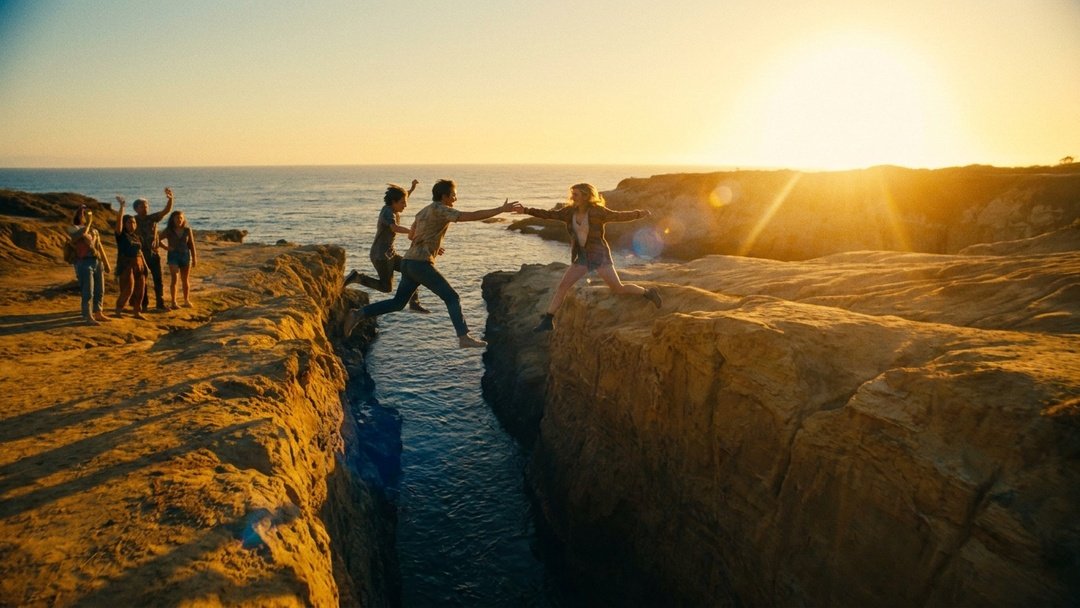
It's a satire of American spectacle, of a culture that can't let anything just be real, and I aimed it wide, at all of us, never at one tribe. But underneath the satire it's about what all my work is about, and what my own life keeps teaching me: that we spend so much energy trying to hold on, to keep, to record, to guarantee, and the only thing that ever actually works is to stop clutching, to want the world out loud even though it's leaving, and to be fully present for the beautiful thing while it's still in front of you. It ends with a leap, off the edge of the known country, toward a sunset no one can sell, hand in hand, into the unknown.
I wrote it because everything beautiful is temporary, and the machine keeps insisting we can keep it, brand it, stream it, own it. We can't. You can only witness the thing while it's here, and love it because it's leaving. That's the whole film. That's the whole thing, maybe. It's what a certain album taught me, in the worst year of my life, and what I've been trying to say ever since.
— Leonard Tachmes, M.D.