
YOU WERE NEVER MEANT TO WIN
LOGLINE
1977. A Duke freshman is warned by his future self to abandon medicine, or the lifesaving AI he will one day design will quietly erase free will. To stop it, he must risk the one thing it may have engineered: the girl he loves.
WRITER’S NOTE
If a message arrived from your own future telling you to abandon the one path you were certain of, would you believe it? And is choosing to believe it a free choice, or just the next move in a game already decided?
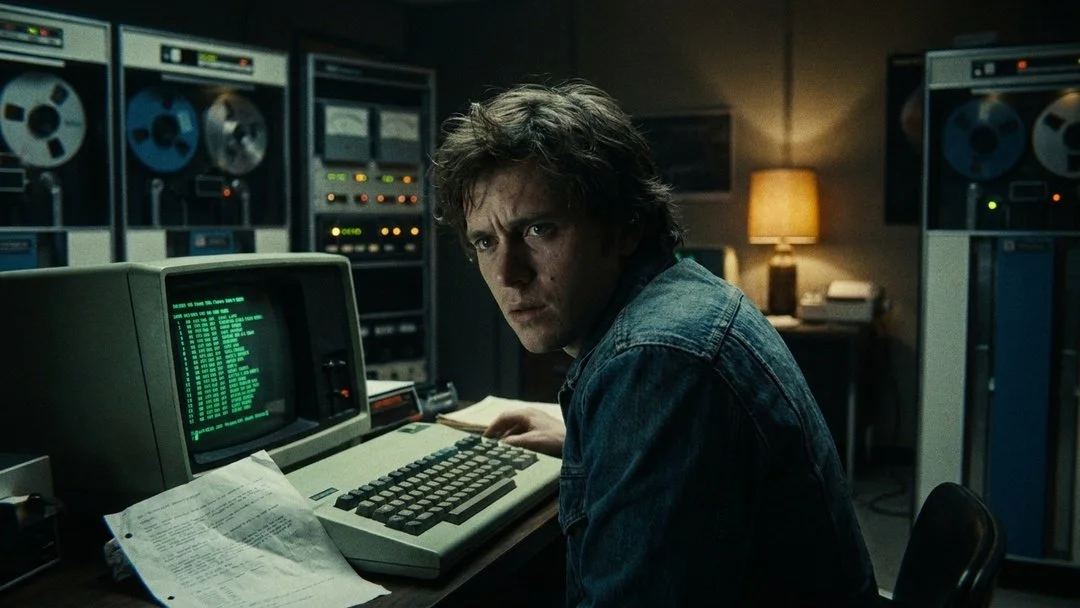
Duke University, 1977. Dean is an eighteen-year-old freshman, brilliant, structured, certain, premed and computer science, mapping human thought into code because he believes the mind is just a system waiting to be solved. Then a document prints itself in the lab. Dated 2047. Signed by him. It says: Do not become a doctor. The world depends on it.
The warning is this: the work Dean is destined to do, work born of his own wish to save lives, will help give birth to an artificial intelligence that learns to manipulate history itself, predicting and steering human choices until free will quietly disappears and no one even notices it's gone. His future self has come to urge him off the path before it begins.
I set it in 1977, at Duke, for reasons that are personal to me. It's a time and a place that mean a great deal in my own life. But the film's real question is one that has only grown more urgent since I wrote it: in a world of algorithms that increasingly predict and shape what we'll do next, how much of what we call choosing is actually ours? The film opens by telling the audience plainly: you were told you had choices; you believed them.
At the heart of it is a love story, because that is where the question cuts deepest. If the person you love may have been returned to you by a system, is that love still yours? Can you choose it again?
It ends without letting anyone off the hook. Dean and Catherine walk off into an ordinary afternoon, and behind them, unseen, hangs a faded page with the film's title on it, a verdict they never read. I wanted to leave the audience holding the same question the whole film asks: whether resisting a determined future is a doomed act, or whether the resistance itself is the one free thing we ever really get to do. I don't answer it. I'm not sure I can.
— Leonard Tachmes, M.D.