
STARRED
LOGLINE
A food critic torches his own girlfriend's restaurant to protect his reputation, then vanishes, only to reinvent himself years later as a charming French consultant, winning her back as another man to atone for what he did.
WRITER’S NOTE
What do you do when you destroyed the person you love , not out of malice, but out of cowardice, and the only way back is to become someone else entirely?
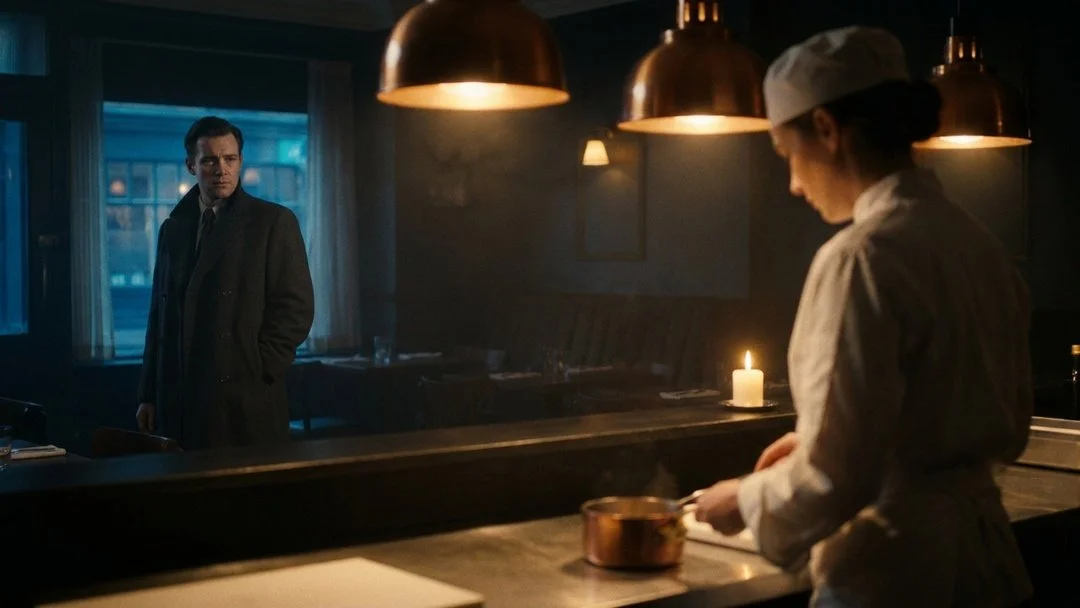
Theo is the one food critic in the city nobody can buy; incorruptible, untouchable, and in love with Mila, a chef whose restaurant is about to open. They're together. And when her opening arrives, he writes his review honestly, generously, truthfully. Then he deletes it. Because to praise the restaurant of the woman he's dating would expose the conflict and destroy the one thing his whole identity is built on: his reputation for being unbuyable. So, to protect himself, he writes a cruel review instead, and watches, in silence, as it destroys her restaurant, her staff, her life's work. Then he disappears on her entirely.
I wanted to write about the particular cowardice of self-protection, the way we betray the people closest to us not through cruelty but through the small, deadly instinct to guard our own image. Theo doesn't ruin Mila because he's a villain. He ruins her because he's a coward, and cowardice, I think, does more quiet damage in this world than malice ever does.
Years later, when Mila mounts a comeback, and her investor insists on an outside culinary consultant with no connection to the kitchen, Theo takes his one impossible chance. He remakes himself entirely: a new man named Étienne, a warm French consultant, an accent practiced in the mirror, built out of a real culinary past in Lyon he'd long buried. He talks his way inside the very restaurant he's trying to atone for destroying, and, as Étienne, wins Mila all over again. She falls for him too. Which means she is now in love with two different men: the one who ruined her and vanished, and the one helping her rebuild, never knowing they're the same man.
It's a story about reinvention as penance, about whether a man can build a better self on top of a buried sin, and whether love can survive being shown who you really were. I don't make it easy for him. I don't think it should be easy for any of us.
— Leonard Tachmes, M.D.