
THE DOCTOR WILL DREAM YOU NOW
LOGLINE
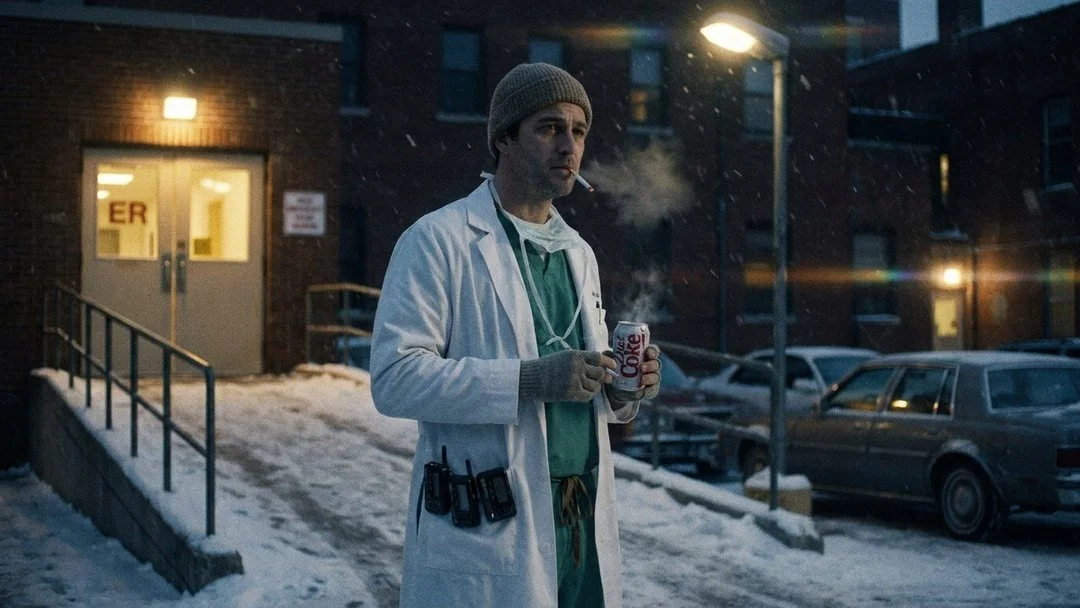
Brooklyn, 1987. A burned-out young surgeon working the front lines of the crack and AIDS epidemics, haunted by a demanding immigrant father he can never satisfy, must confront the ghosts of his past before they consume him, and learn to receive a love he spent his whole life trying to earn.
WRITER’S NOTE
How long do you spend trying to earn a father's approval before you realize love was never something you had to earn?
This is the most personal thing I've written. The film opens with a title card, "Some of what you're about to see, actually happened," and I meant it.
Dean is a young surgical resident in Brooklyn in 1987, deep in the blood and exhaustion of a city at its hardest, haunted by a father he can't seem to satisfy. Pablo is a general surgeon who came from Cuba, a man who had a plan for his son's life and whose approval always seems to sit just out of reach. I know that father. I trained in those years. I had a father like Pablo, an immigrant surgeon, exacting, my measuring stick and my hero at once, and I spent a long time trying to become enough for him.
There's a second person woven through this film I've never spoken about publicly until now. In the dream sequences, there's a character named Jack. Jack was real. He was my roommate at Duke and one of the two closest friends I ever had. I lost him, along with my other dearest friend, in 2013, Jack on Christmas Eve. So I gave him the dreams. He rides through them young and alive, and in the film's final dream, with Dean deep in a coma and his life truly hanging in the balance, Jack is right there in the back of a battered old Volkswagen tearing down the beach, the way we were once, before any of it. That dream ends the way I needed it to, on the last frozen frame of Butch Cassidy and the Sundance Kid, two friends caught forever mid-run, never falling, never gone. That is exactly what a dream, and a film, can do that life cannot. It can hold the people we love still, and keep them running.
The film circles the question underneath every scene. What do you do with a love that was real but never said plainly, from a father who showed it in expectations, from a friend who's gone before you got to say the last thing? It ends with Dean grown, becoming a father himself, looking at the first image of his own child and deciding to hang it beside his father's diploma. Because that, I've come to believe, is the answer. Not that we earn the love of the people who shaped us, but that we finally learn to receive it, and then to give it forward. José Martí, the poet my father believed understood medicine like no other poet, wrote it plainly: "El alma crece cuando se da." The soul grows when it gives. I wrote this one to give something back to mine, to my father, and to Jack.
— Leonard Tachmes, M.D.