
HINENI
LOGLINE
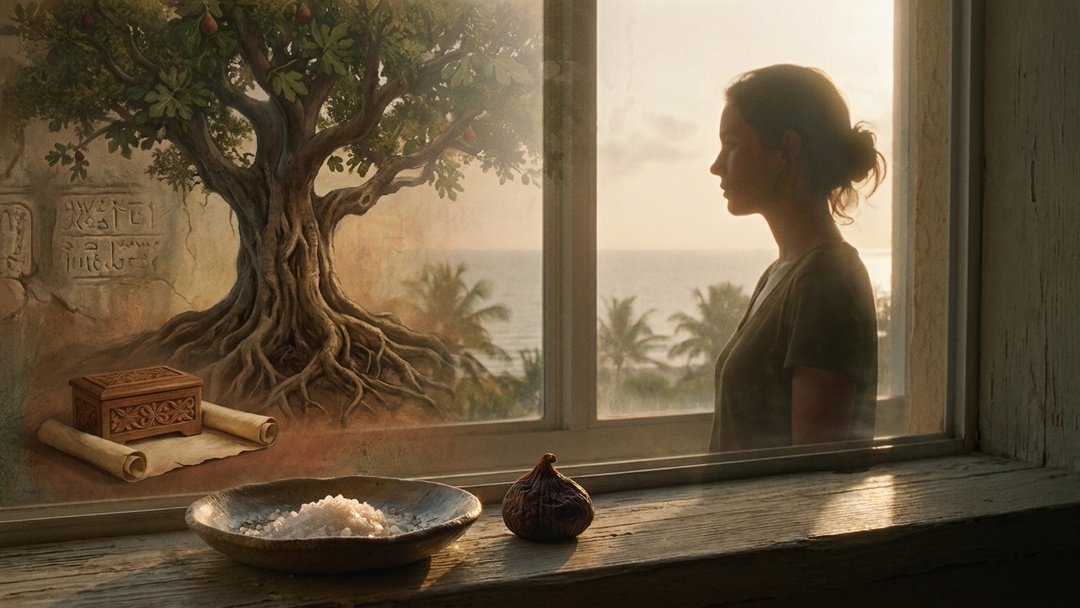
A Cuban-Jewish woman in Miami Beach inherits a 4,000-year-old box that lets her live the memories of everyone who carried it, and must choose between surrendering it to a museum or carrying it herself, though every vision steals her breath.
WRITER’S NOTE
What if the people who came before you hid a warning inside you, and you were the only one left who could still read it?
Hineni is Hebrew for "Here I am," the answer Abraham gives when he is called: the word of someone who refuses to hide, who steps forward and is counted. It is the oldest way of saying: I will not be erased.
I come from two Jewish inheritances braided together, my father's Ashkenazi line and my mother's Sephardic one, carried, like one of the characters in this film, "like coins in opposite pockets." I grew up inside the music of Jewish Miami, Cuban and unapologetic, salt on the windowsill, a fig at the bottom of the glass. This film is the closest I have come to writing directly from that inheritance, from the sense that a family's memory is passed down deliberately, encoded, entrusted to whoever is still listening.
HINENI follows Rebecca, a woman in Miami Beach who begins to understand that her father did not simply raise her; he hid something in her: a melody counted in intervals, a line that stretches back through every exile to a woman named Dinah, banished from Babylon for refusing to erase. Across centuries, the same words survive: "One will forget. And the line will break. But memory is rebellion. And ink is survival. We are the carriers." When the world offers to keep that inheritance safe behind glass, Rebecca must decide whether to hand it over or carry it herself.
I wrote it because I believe that's true: that remembering is an act of defiance, that the people who love us plant themselves in us on purpose, and that we are all, whether we know it or not, carrying something forward for someone who is counting on us not to forget. The salt tries to erase. The fig seals and keeps. This is a story about choosing the fig.
Leonard Tachmes, M.D.