
THE PRISM
LOGLINE
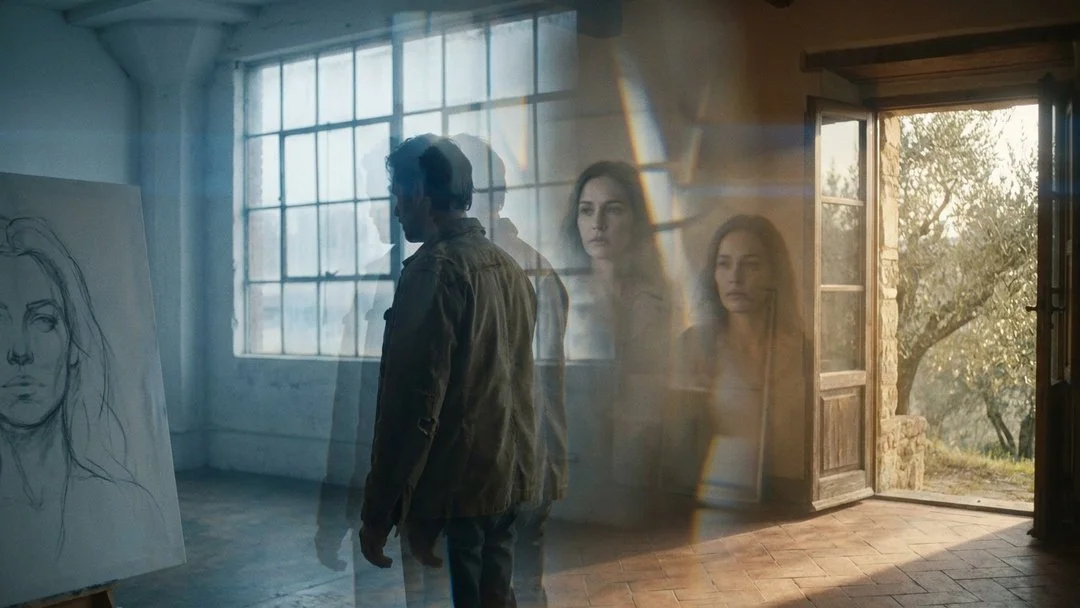
An artist who has spent his life controlling every frame dies at his gallery opening and enters a quantum reckoning with every version of himself, and every life he might have lived, where he must choose the one self that survives.
WRITER’S NOTE
If you could see every life you might have lived, and had to choose only one to keep, which would you save?
I spent ten years running an art gallery, surrounded by people who had bet their whole lives on a single vision. I've thought about that bet ever since: the roads a person doesn't take, the selves they set down to become the one self they are. We only get to live one version. The others don't disappear, exactly. We carry them, as regret, as wonder, as the ghost of who we might have been.
So I imagined a world where, at the end, you finally get to see them all. THE PRISM begins with a quantum premise: at death, the soul perceives every version of itself, every life it lived, and every life it could have lived, and from that total recognition, one life is chosen to remain. The rest fade.
Milo is an artist who has spent his life controlling the frame, making patience look like power, keeping his subjects, and his loves, at the precise distance he can bear. When the Prism opens to him, he has to face not just the life he lived but all the ones he didn't, and the same souls he loved wearing every face they might have worn.
I didn't write it to answer which life is the right one. I wrote it because I don't think there is a right one, only the one you choose, and the love that keeps surfacing across all of them, refusing to fade no matter which version remains. That's the thing I keep chasing in all my work: what survives us, even here, even at the end, even across every life we never got to live.
— Leonard Tachmes, M.D.